AI ERP systems: Intelligent solutions by business size
AI ERP software combines traditional ERP capabilities with machine learning, predictive analytics and automation to drive smarter business processes.
Top vendors are now pushing features like AI assistants and automated workflows that help businesses act proactively by predicting maintenance needs, managing inventory efficiently, and suggesting data-driven optimisations.
Why this shift matters
AI-driven ERPs can boost productivity and agility. Recent data from Ernst & Young saw an overwhelming 97% of senior business leaders investing in AI reporting a positive ROI.
AI tools like robotic process automation (RPA) handle repetitive tasks like invoicing and data entry, while machine learning helps create smarter forecasts. This leads to faster, error-free operations and frees up your team for more strategic work.
AI can also identify product trends in plain language and predict supply chain delays, which means fewer stockouts and smoother cash flow.
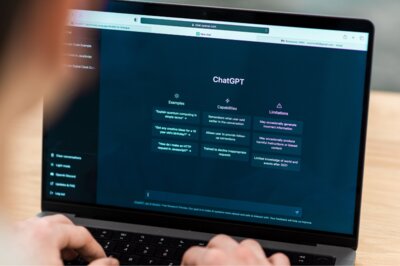
Oracle NetSuite’s ‘NetSuite Next’ uses conversational AI and agentic workflows so that users can ask the ERP questions in plain English and get instant answers or actions.

Key features of AI ERP
- Predictive analytics and forecasting: Systems that use historical sales, inventory, and market data to forecast demand, maintenance needs, or cash flow.;ML algorithms in ERP can adjust production plans on the fly based on predicted demand.
- Automated workflows: Built-in RPA bots that handle routine tasks (invoice processing, order entry, inventory updates) automatically. This reduces manual errors and speeds up cycle times.
- Anomaly detection: AI models flag unusual transactions or process bottlenecks (e.g. fraudulent orders or creeping downtime), alerting managers to investigate before problems escalate.
- Natural language and AI assistants: Conversational interfaces (chatbots) that let users ask questions or generate reports by typing or speaking. Priority Software’s aiERP lets users chat with the system to create custom reports or analyze data.
- Business Intelligence: Dynamic, AI-powered dashboards that highlight KPIs and trends as data flows in. These visual analytics are often tailored by industry. For example, highlighting shop-floor metrics in manufacturing or route optimization in distribution.
- Industry-specific AI modules: Specialized AI apps for sectors like manufacturing or construction. IFS Cloud, for example, offers AI-driven production planning and quality control tools for manufacturing and construction companies.
Selecting AI ERP (by business size)
AI-powered ERP suits companies of all sizes, but mid-sized businesses often reap the biggest gains. Small companies might start with add-on AI modules in a basic cloud ERP, whereas large enterprises build comprehensive AI suites.
Some mid-market ERP vendors now package advanced AI without the heavy IT overhead of the past. They can get pre-built AI templates and no-code tools to deploy analytics quickly.
SMBs & growing companies
Cloud-first ERPs like Acumatica and Priority ERP offer AI as part of a SaaS package. These are built to be easy to configure and deploy.
Acumatica Cloud ERP offers practical, industry-specific AI solutions that boost efficiency without complexity. Likewise, Priority ERP embeds generative AI so users can interact via natural language and run advanced forecasting even if they lack in-house data science.
These solutions let smaller teams start simple (e.g. using AI chat to ask about inventory levels) and scale up, since you’re not locked into hard-coding or long projects.
Mid-sized manufacturers & distributors
Mid-market firms need an ERP that handles more data and complexity but still fits a modest budget. Systems like IFS Cloud, and Infor CloudSuite Industrial (SyteLine) target this segment.
They include AI for manufacturing execution, supply-chain optimization, and finance.
SYSPRO’s ERP is also tailored for mid-size manufacturers, using ML to predict maintenance issues and improve quality. Infor provides a comprehensive cloud suite for industrial companies, bolstered by Infor’s broader Industry AI tools for smart scheduling and inventory planning.
These mid-market ERPs strike a balance: powerful AI capabilities for planning and BI, but with deployment packages and pricing suited to companies of hundreds (not just Fortune 500s).
Large enterprises
At the other end, enterprise systems like SAP S/4HANA and QAD have been embedding AI at scale. Bigger businesses often care about governance and integrations, so these tier-one systems provide AI governed by existing roles and policies while mining data across global operations. However, the core AI principles are similar: automated order processing, intelligent supply chain, and advanced analytics.
Budget affects how much AI you get ‘out of the box’ versus needing a custom setup, but the trend is clear: even mid-sized companies can now implement ‘enterprise-grade’ AI in their ERP through cloud platforms.

SAP notes that mid-market businesses are now using AI, automation, and data insights in cloud ERP to accelerate growth and responsiveness.
AI ERP by industry: Manufacturing, Distribution, Construction, and more
Manufacturing
Mid-sized manufacturers benefit greatly from AI-powered ERP systems, which can handle tasks like predictive maintenance, quality inspection and production planning.
For instance, SYSPRO's AI helps businesses foresee equipment problems and improve their supply chains. Similarly, QAD and IFS offer specialized AI features for manufacturers, such as forecasting material demands and optimizing machine usage.
Some emerging platforms like Naologic also advertise AI agents that automate quote-to-cash workflows in job shops. If you make physical products, an AI-capable ERP can power smart factories: integrating IoT sensor data and ML to reduce downtime and costs.

Distribution & supply chain
AI helps distributors manage inventories and logistics more efficiently. Customizable dashboards provide real-time analytics on sales trends and stock levels, and AI can automate reorder recommendations and route planning.
For example, Infor’s industry cloud has AI agents specialized in procurement, inventory, and contract-related tasks for operations management. Large distributors often use solutions like Infor CloudSuite Distribution (an AI-enabled distribution ERP) or Oracle NetSuite, both of which offer AI-driven forecasting and anomaly alerts for orders and shipments.
AI ERP can spot slow-moving inventory, predict demand shifts, and even help optimize warehousing layout and pick-pack paths automatically.

Construction and project-based
Construction businesses have unique needs in project costing, scheduling, and equipment management. AI-enhanced ERP for construction can use historical project data to improve bid accuracy and predict potential delays.
Several ERP vendors have construction modules with AI features. For instance, IFS includes AI-driven project workflows and cost management tools suitable for engineering and construction projects. Acumatica’s project accounting can incorporate predictive analytics to forecast project overruns and resource conflicts.
Recommended further reading: The top 10 construction ERPs, compared
If dealing with contractors, CMiC's integrated construction ERP stands out for its industry-specific project management tools, construction financials, and collaborative workflows.
When booking demos, be sure to ask about workforce optimization, job profitability projections, and automated compliance checks on permits or codes.

Other industries
Retailers see AI in demand forecasting and personalized marketing modules. Healthcare or services companies might use AI assistants for scheduling or customer support.
The key is choosing a system with industry functionality that also has open APIs or native AI add-ons. For example, an AI-powered food & beverage ERP can optimize recipe costs and shelf-life predictions; if you’re in pharma, it can enforce quality checks via image recognition.
Next steps and further resources
If your business struggles with manual processes, forecasting errors, or siloed data, an AI-driven ERP could help future-proof your operations.
Find the right ERP for your mid-market manufacturing, distribution, or construction business with our free AI-powered ERP comparison guide.

Free white paper
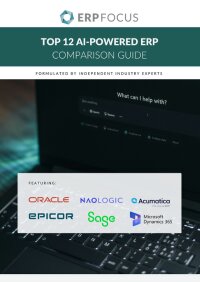
Top 12 AI-powered ERP comparison guide
Compare top vendors and learn how they can automate your repetitive workflows, drive greater efficiency, and yield higher ROI.
Featured white papers
-
Top 12 AI-powered ERP comparison guide
Compare top vendors and learn how they can automate your repetitive workflows, drive greater efficiency, and yield higher ROI.
Download